


Fifteen Years Old. You've Just Been Diagnosed With Cancer....Now What?
- careandcuremagazin
- Jun 24
- 6 min read

by Lauren Hill, Grade 12, Jensen Beach High School, (Stuart, FL)
"It's the little things that matter ... the things you never expect."
You’ve just been diagnosed with a rare form of blood cancer. The doctors tell you that, at this phase, chances of survival are not great; most existing methods might only serve to potentially extend your timeline, but nothing is a strong guarantee of full recovery.
Still, they mention a new treatment being researched (an “experimental form of chemo” still in the “clinical trials phase”) which recently received funding. The lab is looking for test patients. Maybe, if paired with extensive chemotherapy, and bone marrow monitoring, and plenty of
prayer ... there’s a chance?
They aren’t sure what the full timeline will look like — but they do tell you that if you choose to pursue the experimental treatment route, don’t expect any return to normalcy for at least fourteen months.
Your brain, spiraling, zooms fourteen months into the future...
What do you imagine?
Chemotherapy drips? Hospital beds? Lab coats ... tubes ... needles ... clipboards; white tiles and pill bottles. Maybe that feels dizzying. Switch instead to thinking about data; charts, and graphs; blood counts, scans, survival rates.
Most people might focus on the body. Hair loss. Muscle atrophy. T-cells. Bone marrow. Insomnia.
But in that moment, when lifetimes of science and mourning come rushing to the brain as it tries to comprehend what “fourteen months” of “non-normalcy” will look like... most people might not think about the smaller, mundane moments. And how those small moments divorced from the context of anatomy and biology — might themselves function as a form of medicine; of healthcare; of healing; might themselves prove to become tiny miracles.
A trip to buy a wig. A stack of Polaroid photos taken before treatment began. A conversation with another teenager who understands exactly what you're going through. A text message from a random classmate on a day where you’re wondering whether you’ll even make it to graduation. A reminder that you are still yourself, even when cancer tries to convince you otherwise.

First, here’s the truth. That isn’t my story. And although I do know the story intimately, it is ultimately not my story to tell. That’s the story of Amanda Hill: 6 feet tall, strong, athletic, Varsity Team Captain; Volleyball State Champion; my teammate; my best friend; my big sister. Then, in high school, she is suddenly diagnosed with a rare form of Acute Lymphoblastic Leukemia (ALL). She is fifteen. I’m thirteen. And over the next fourteen months, I watched as my big sister shrunk down, hair withering, muscles shriveling, confined to a bed. As two scared teenaged
girls, we weren’t sure fully what to expect, or how to navigate it all.
Even though the cancer was not in my body, our shared worlds turned inside out. Suddenly, volleyball practices were replaced with doctor visits. Protein shakes were replaced with pills and mystery fluid. Classrooms and school dances, friends and teachers, sports and laughter, were replaced with a beeping monitor, and closed doors, and pale fluorescent lights. And Amanda’s promise of graduation, and college, and adulthood, were replaced with uncertainty. Mine too. I’d
always imagined following in her footsteps; now, I wasn’t sure if there would even be steps to follow.
***
So maybe it isn’t you who hears that fateful diagnosis. And maybe it won’t ever be. But we all know someone whose life was affected by cancer: a family member, a friend; a teacher, a coworker; a favorite artist, a famous athlete, a fictional character. And if you don’t,
then you do now.
I’m not here to focus on the individual, physical, biological toll that cancer takes. Nor even the financial, logistical ones. Instead, I want to go past the chemotherapy, the medications, the experimental treatments that ultimately saved Amanda’s life. I have no doubt my big sister’s
journey comes with a bounty of deeply personal life lessons. Those lessons will never be directly mine. I’m not the cancer girl — instead, I’m like most people whose lives are affected by cancer: I’m the family member watching.
Throughout Amanda’s many bed-ridden catch-up homework sessions, and bone marrow extractions, and missed proms, together we learned something many cancer patients and families inevitably learn firsthand: first, that surviving cancer is not only a physical battle, but a mental and emotional one as well; second, that fighting cancer is not an individual story—but one that takes a community.

Sometimes, helping other people can become one of the most powerful and effective ways to help yourself.
Throughout Amanda’s story, there was an important light in the tunnel that she always talks about: it was when she, a withered, atrophied, bald teenage girl with cancer, met other kids who also had cancer — many of them younger, even more scared. And they helped each other. They talked about their fears, their pains. They shared stories, and articles, and shared insights on biology and spirituality. They helped one another with their pills, and their needles, and their ports.
Chemotherapy might help attack the cancer of the body. But chemicals alone cannot attack cancers of the mind: your agency; your will; your internalized locus of control; your ability to hope; your ability to meet tomorrow.
Cancer has a way of making people feel powerless. Decisions are made by doctors. Schedules are dictated by treatment plans. Your future becomes dependent on blood counts, scans, and medications you can barely pronounce. For a family accustomed to being constantly in
motion—sports practices, school events, weekend plans—that loss of control can be devastating.
By organizing and devoting ourselves to the community of cancer research and fundraising, we found something we could control amidst the chaos.
Long before the diagnosis, our family had been familiar with the Leukemia & Lymphoma Society (LLS). Our grandfather had died from lymphoma years earlier. After Amanda's diagnosis with
Acute Lymphoblastic Leukemia (ALL), however, the organization's mission became intensely personal.
The experimental clinical trial that ultimately helped save Amanda's life did not appear out of thin air. Scientific breakthroughs require years of research. Research requires funding. And much of that funding comes from organizations willing to invest in treatments long before they
become standard practice.
For us, that realization changed everything.
What began as a desire to give back quickly transformed into a mission. Through LLS's Student Visionaries of the Year program, we helped build Team Bad Blood—a coalition of students from across our community, many of whom had their own personal connections to cancer. Together,
we rallied around a simple idea: helping ensure future patients would have access to the same hope that Amanda had received.

For nine months, our lives became a blur of Zoom calls, FaceTimes, planning meetings, sponsorship requests, donation letters, spreadsheets, phone calls, and community events. We
organized fundraisers across multiple cities, coordinated volunteers, partnered with local businesses, and reached out to anyone willing to listen. We founded Pickle for a Purpose, a charity pickleball tournament that quickly became one of the most successful student-led blood
cancer fundraisers in South Florida. We hosted swim-a-thons, giveback nights, mini-golf tournaments, bingo events, and countless grassroots fundraising efforts.
What surprised us most was that the impact extended far beyond the money.
Yes, Team Bad Blood ultimately raised more than $115,000 for blood cancer research. Our regional campaign raised over $610,000. Years later, Team Revenge Runs Red would continue that mission, helping our family and community contribute to fundraising efforts that have
collectively surpassed one million dollars.
But the most important thing we raised was hope.
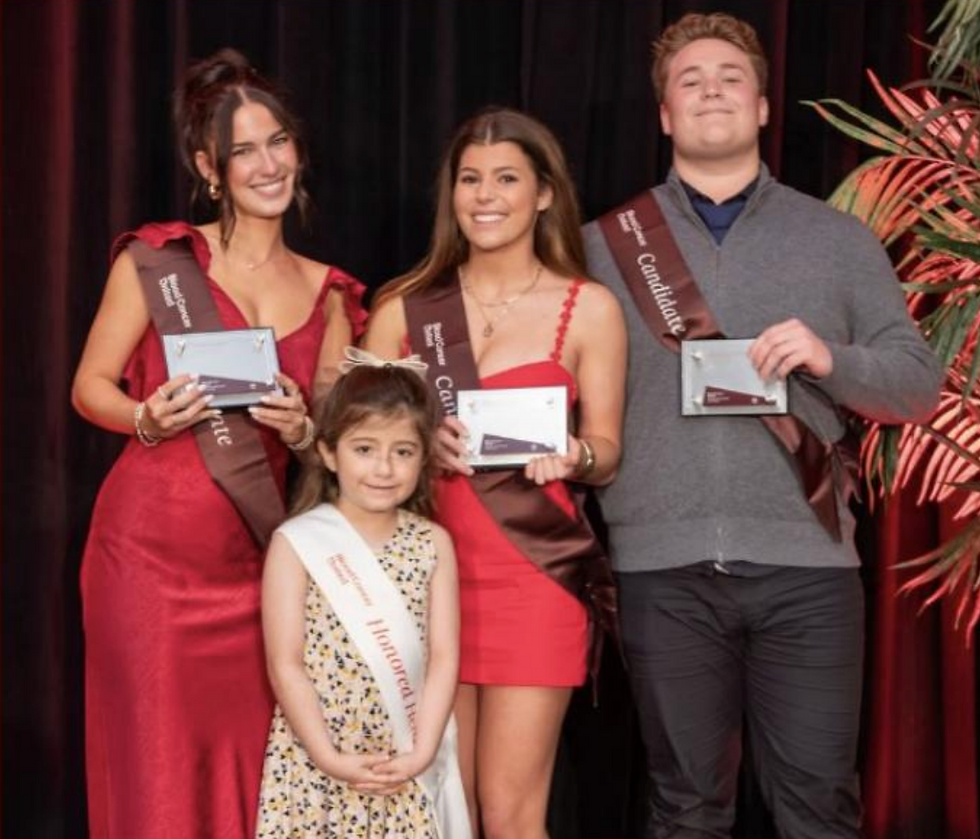
For the first time since Amanda's diagnosis, we were no longer sitting on the sidelines waiting for test results. We were organizing. Calling sponsors. Planning events. Writing donation letters. Meeting survivors. Supporting families. Instead of asking what cancer would take from us next, we were asking what we could build together.
Through LLS, we met other survivors. We met families currently navigating the same fears that had once consumed us. We met children with diagnoses eerily similar to Amanda's, and parents asking many of the same questions our own parents had once asked. Gradually, cancer
stopped feeling like an isolated tragedy and started feeling like a shared human experience.
Most importantly, we began to understand that cancer research is not some distant, abstract concept.
Somewhere, right now, another teenager is sitting in a hospital room hearing the same terrifying words Amanda once heard. Somewhere, another family is hoping researchers discover a breakthrough before time runs out. Somewhere, another patient is being offered an
experimental treatment that only exists because someone else believed enough to fund the research behind it.
Amanda is alive today because researchers were given the resources to pursue a treatment that was once considered experimental. The very type of research our campaigns supported is the same type of research that helped save her life.
For our family, that transformed fundraising from a charitable activity into something much more
personal.
It became a way of passing hope forward.
And perhaps that's the most remarkable thing we learned along the way: when people think about cancer, they often imagine scientists in laboratories, doctors in hospitals, and patients in treatment rooms. Those people are all essential. But so are the volunteers, the donors, the
students, the sponsors, and the communities who make that work possible.
Fighting cancer may begin with pills and needles. But the rest of the journey echoes beyond the hospital bed: it takes a community to keep that fight alive.
-------------------------------------------------------------------------------------------------

Sources:


Comments